Publication date
4 may 2026


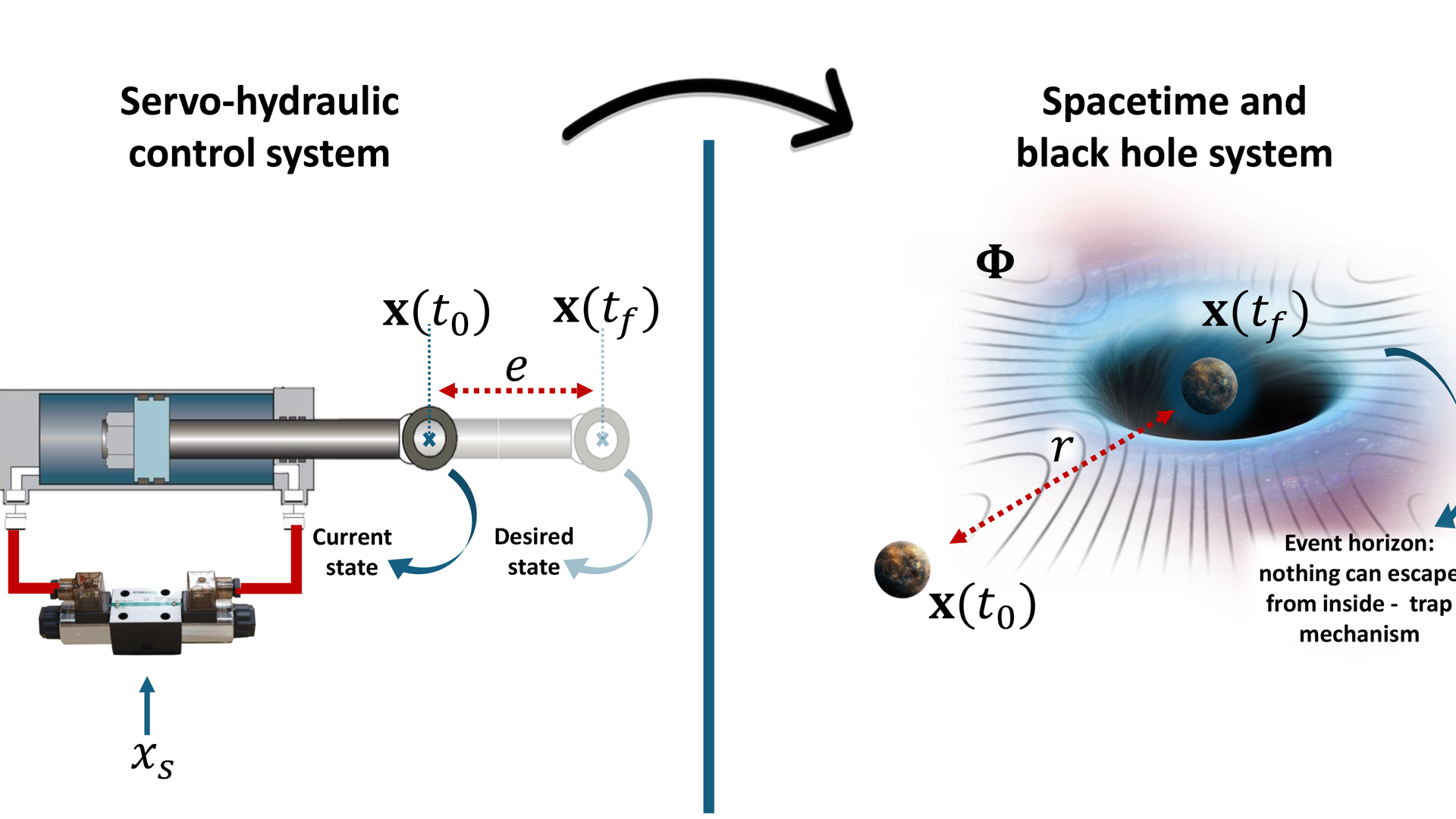
Researchers from TEMA – Centre for Mechanical Technology and Automation of the University of Aveiro (Rodrigo Bernardo and Marco Santos), in collaboration with researchers from CIDMA (Delfim Torres and Carlos Herdeiro), have developed a method for controlling servo-hydraulic systems inspired by physical principles that explain the dynamics of black holes, namely gravitational potential and accretion.
The relationship between the astrophysical system and the servo-hydraulic system is established through an analogy in which the state of the servo-hydraulic system is represented by the position of a body attracted by a black hole. The control error is defined as the distance between this body and the centre of the black hole, while the control signal is defined as the combined effect of gravitational potential and accretion. The desired state of the servo-hydraulic system is thus considered to correspond to the centre of the black hole.
This study, published in the journal Results in Engineering, demonstrated that dynamics observed in black holes can be effectively used to control electromechanical systems, achieving performance levels superior to several existing nonlinear control methods.
https://doi.org/10.1016/j.rineng.2026.110367
The method was also recently applied to alpha-particle-emitting radiopharmaceutical therapies, leading to a significant reduction in the administered amount of radiopharmaceuticals compared to currently used clinical methods. This study was carried out by researchers from TEMA (Marco Santos, Rodrigo Bernardo and Gil Gonçalves), in collaboration with researchers from the Coimbra Institute for Clinical and Biomedical Research (Inês Marques and Filomena Botelho).
https://doi.org/10.1088/1361-6560/ae5017
TEMA secures €1.46 million for new state-of-the-art scientific infrastructures
TEMA Strengthens International Collaboration with ICV-CSIC through the I-LINK25007 Project
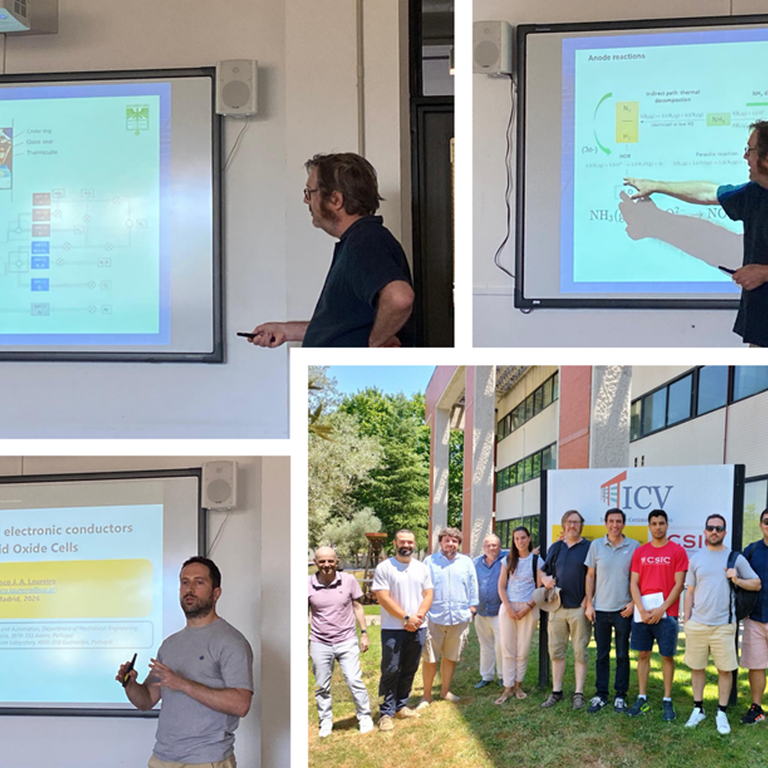
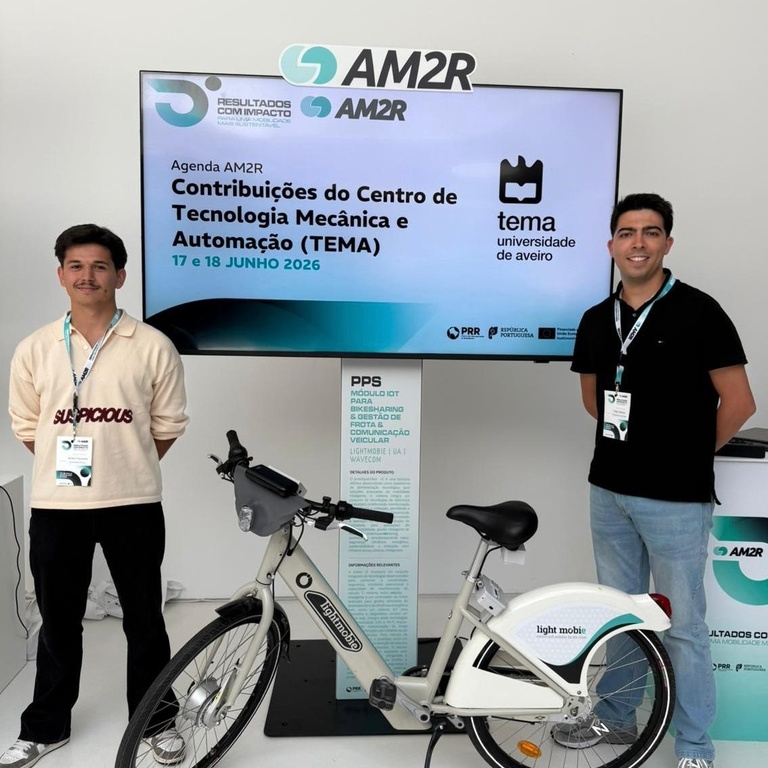
TEMA researchers participate in the final event of the AM2R Mobilizing Agenda and present a smart bicycle prototype
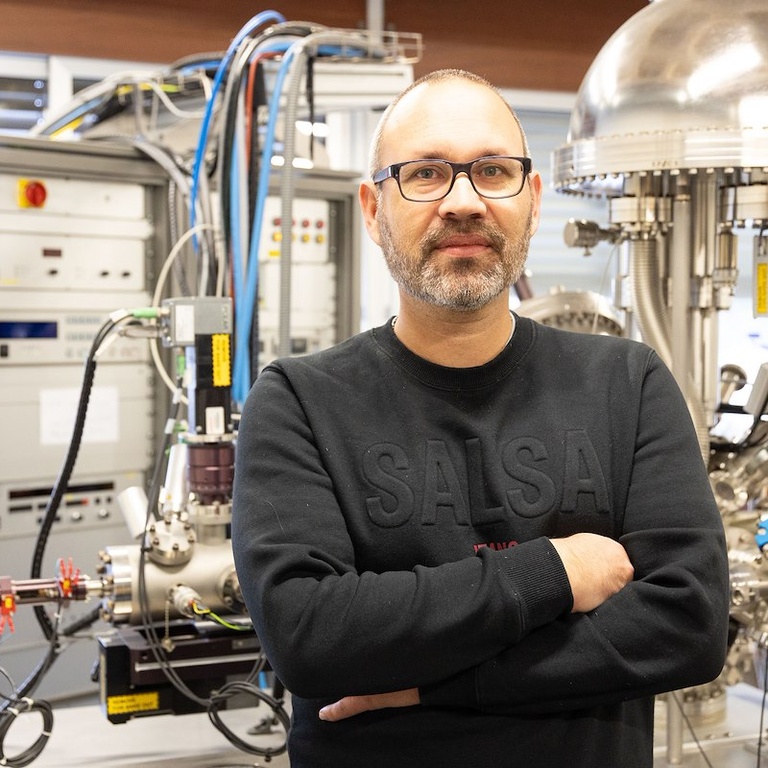
Professor Paulo Davim ranked first in Portugal in Mechanical and Aerospace Engineering in 2026
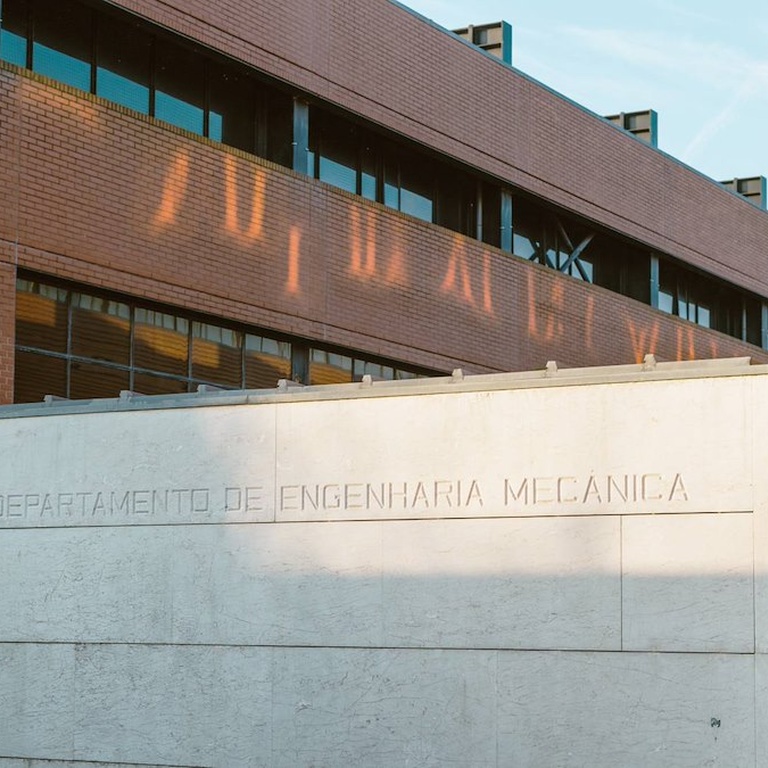
Easter 2026 Science Internships at TEMA


Project led by a TEMA researcher, Gil Gonçalves, develops innovative nanocapsules to revolutionize cancer therapies


Study from the University of Aveiro shows that more compact cities are more sustainable - the team includes a researcher from TEMA

Prof. João Paulo Davim has been awarded the highest professional distinction granted by the Portuguese Institution of Engineers

Recognised excellence: LEM renews its ISO 9001 certification for another 3 years

SLIC brought together experts and researchers in sustainable lighting at the University of Aveiro

UA researcher ranked as Portugal’s No. 1 in Mechanical and Aerospace Engineering

TEMA Achieves Top National Ranking with "Excellent" FCT Evaluation

In vitro 3D electrical stimulation technology: patent application in Europe and the USA

Efficient Water Supply & Wastewater Systems Forum

UAveiro researcher represents Europe in the Research in Engineering Education Network

UA researchers develop a more comfortable and efficient bicycle system


