Competencies
Responsible Researcher: Francisco Loureiro
Core competencies of the laboratory
- Several electric furnaces enable material synthesis, heat treatments, calcination and related processes, covering a broad range of capabilities up to 1600 °C.
- A uniaxial press is available for sample moulding and compaction.
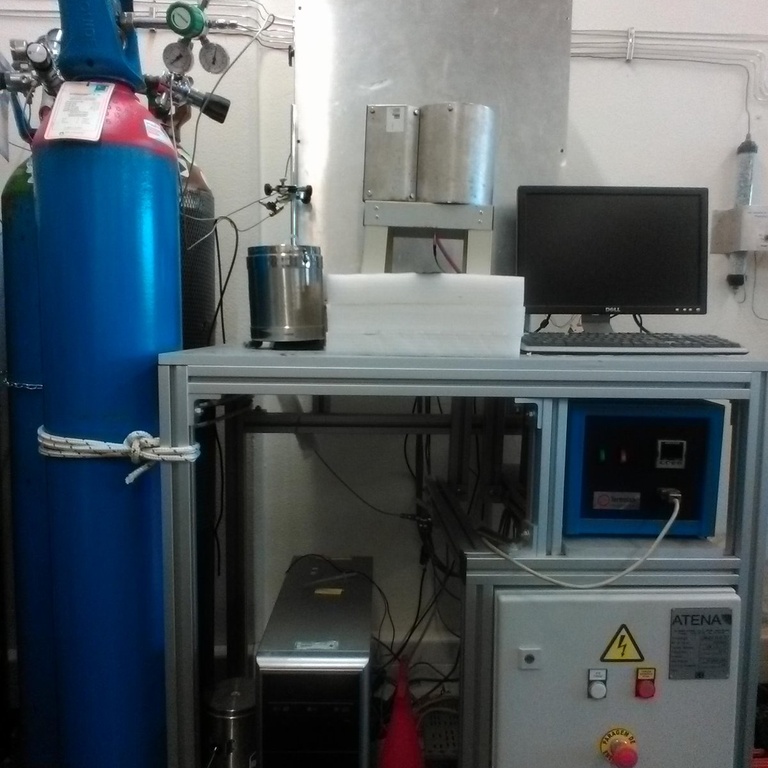
- A dilatometer allows the measurement of dimensional changes as a function of temperature under reducing atmospheres (e.g., H₂, N₂ or mixtures) and oxidizing atmospheres (e.g., air, O₂).
- A fume hoodequipped with heating plates supports organic and inorganic syntheses, as well as other preparatory procedures requiring controlled ventilation.
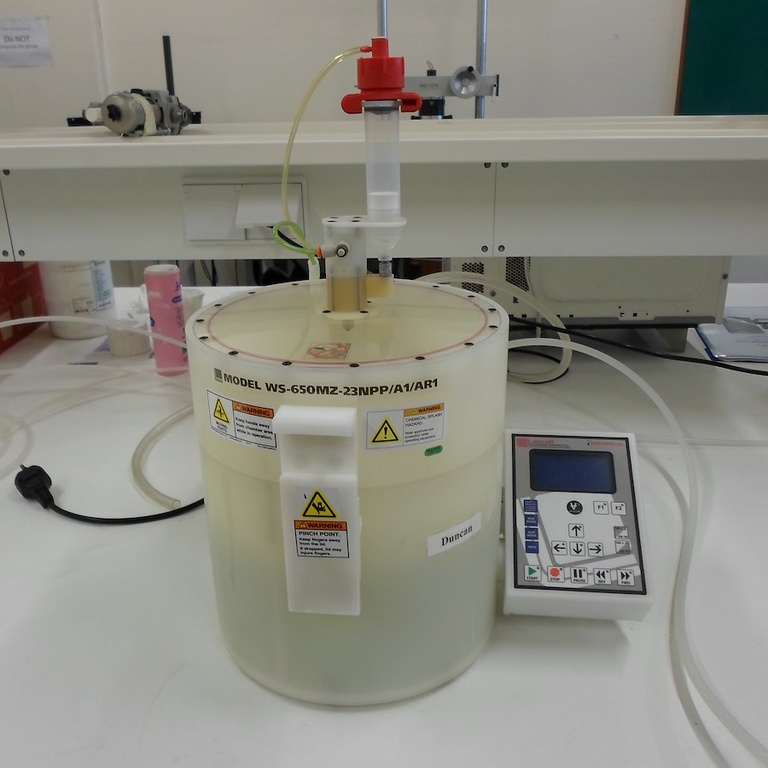
- A dedicated electrochemical system is available for corrosion testing and hydrogen production through water electrolysis in liquid media, enabling the evaluation of material/coating stability and electrochemical behaviour in solution.
- A Sieverts‑type apparatus is available for volumetric studies of gas–solid interactions, including hydrogen sorption, desorption kinetics and storage‑capacity determination.
Relevant Additional Information
- The laboratory plays a central role in the processing and optimization of ceramic, metallic and composite materials, enabling precise control of thermal and atmospheric conditions to tailor structural, mechanical and functional properties. This supports the development of advanced materials for energy, catalysis, sensors, electronics and structural engineering.
- The combination of thermal‑processing equipment, dilatometry and multiple gas lines enables in‑depth investigation of thermal expansion, sintering behaviour, dimensional stability and solid–gas reaction kinetics under diverse environments.
- The laboratory also supports electrochemical research, including corrosion studies and water‑splitting experiments, complementing its capabilities in assessing material stability and performance in liquid environments.
- The Sieverts apparatus significantly enhances experimental capabilities in gas–solid interaction research, including hydrogen‑storage materials, getter systems and gas‑sorption processes.
Overall, the combination of dedicated infrastructure, technical expertise and experimental versatility makes TRATM an essential platform for fundamental and applied materials‑science research, supporting multidisciplinary projects and scientific collaborations, and contributing decisively to innovation in emerging technologies and industrial applications.